PQC
- Stands For
- Post-Quantum Cryptography
- Easy Explanation
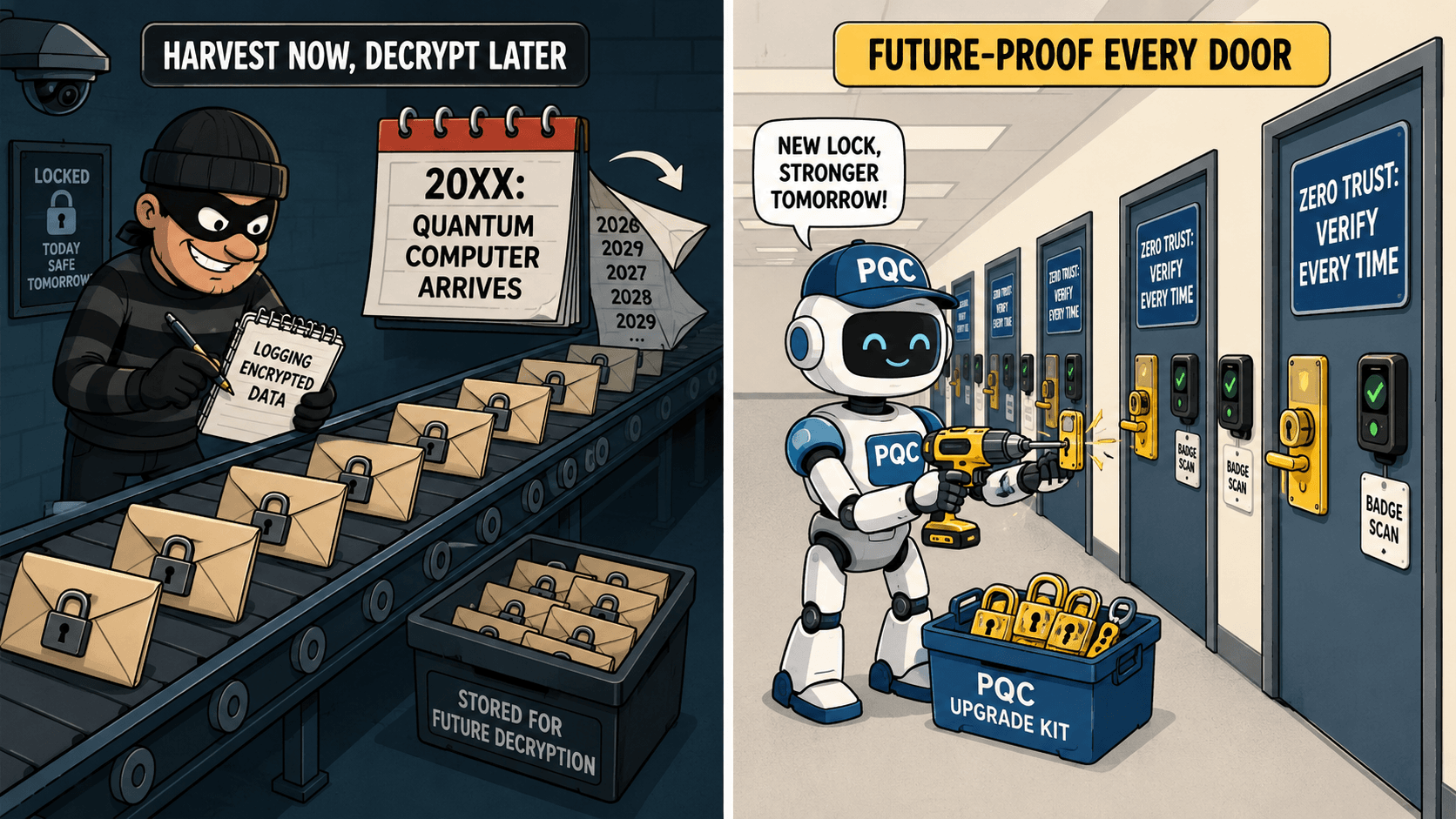
- New encryption math designed so that even future quantum computers can't crack it. The locks are upgraded before the master key is created.
Module roadmap
Security today relies on complex math that standard computers can't crack. But future quantum supercomputers will solve those math problems easily, acting like a master key for current encryption. The scary part is "harvest now, decrypt later": hackers can record (or harvest) your private data today and unlock it years from now when quantum tech arrives. If secrets need to stay hidden for a decade, you need quantum-proof encryption right away (even before quantum computers are mainstream!).
The solution is Post-Quantum Cryptography (PQC). These are brand-new mathematical locks designed to stop quantum computers, which NIST (National Institute of Standards and Technology) officially standardized in 2024 to update modern software. Because 6G networks are being built alongside this upgrade, 6G will be the first wireless generation to have built-in quantum protection from day one.
The second shift is philosophical: Zero-Trust Architecture (ZTA). Old networks were castles, hard wall, trusted interior. But modern networks are clouds of software from many vendors (Module 8), running in many places, with satellites and edge sites everywhere; there is no 'interior' anymore. Zero trust replaces the moat with a simple rule: nobody is trusted by default, every function, device, and admin continuously proves identity and authorization, like a building where every single door checks your badge, forever.
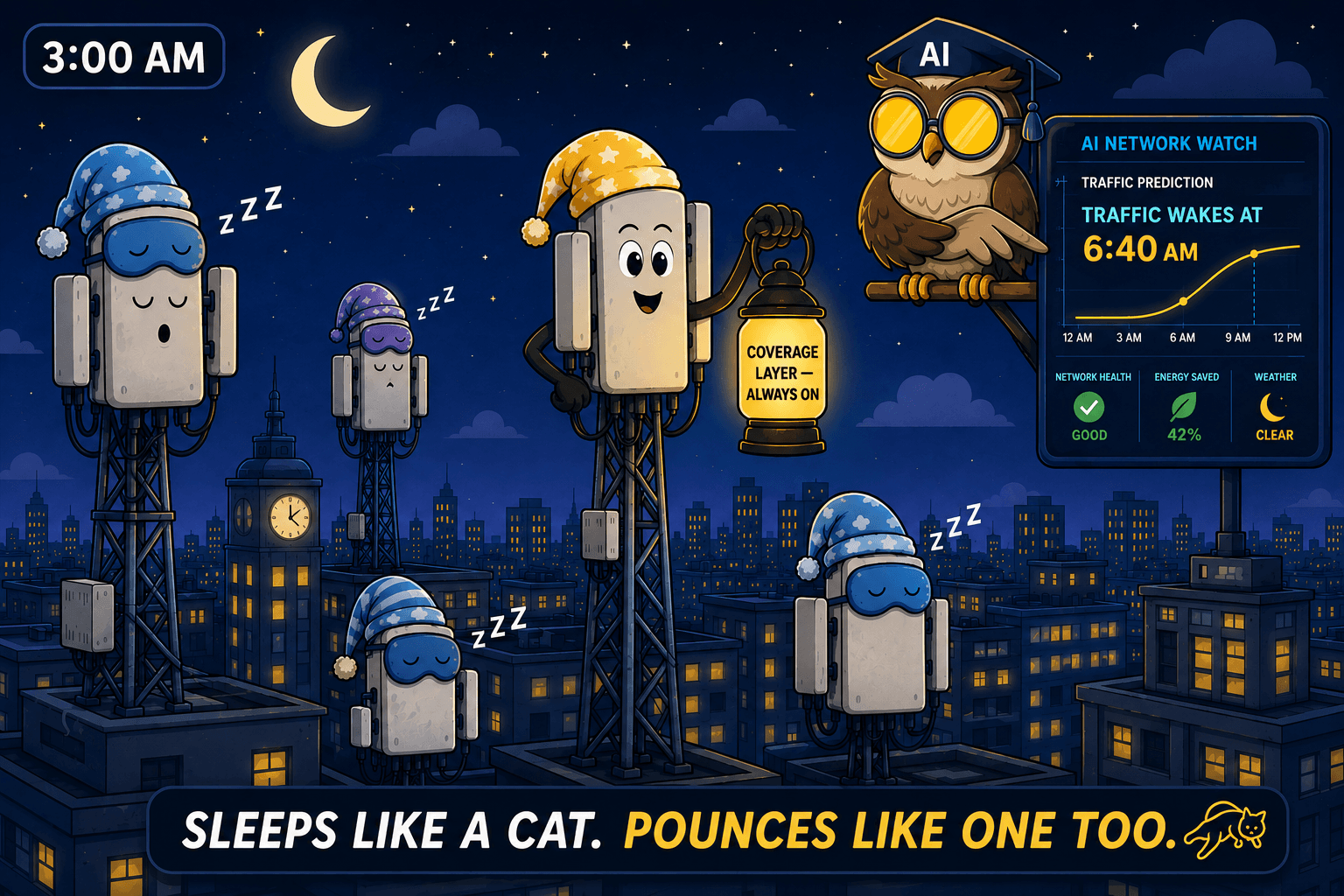
Mobile networks consume real electricity, the RAN alone typically accounts for the majority of a carrier's energy bill, and every generation has carried more traffic than the last. 6G makes a promise no previous generation dared: carry far more, consume less. That's why IMT-2030 (Module 1) elevates sustainability from footnote to design goal, and why energy efficiency joins speed and latency as a first-class KPI.
How does a network diet without starving users? Mostly by not burning energy on nobody:
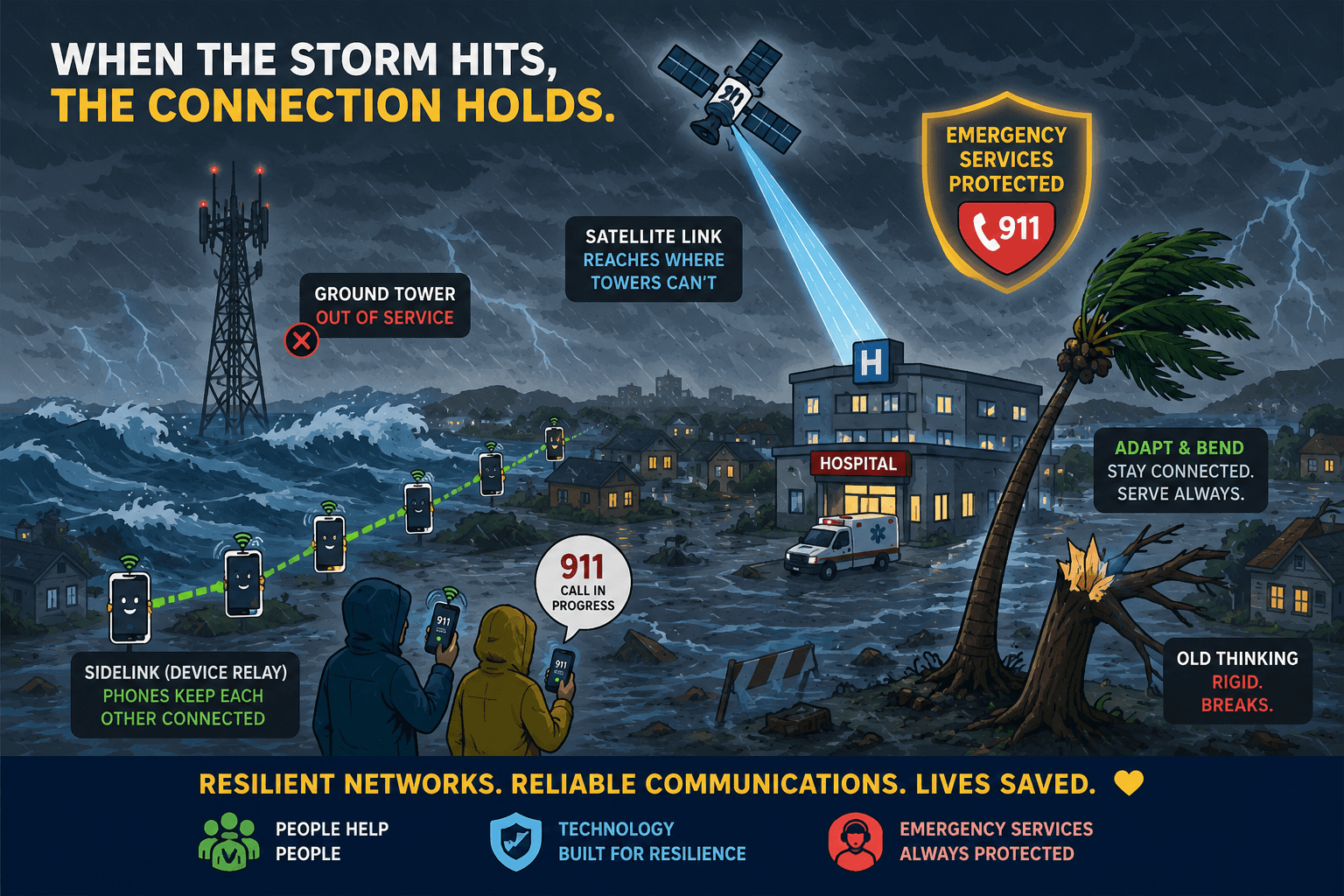
Security asks 'can attackers break in?'; resilience asks a broader question: 'when anything goes wrong, hurricane, fiber cut, grid blackout, software bug, does service survive?' As networks became society's nervous system (payments, 911, hospitals, logistics), resilience graduated into a design requirement, explicitly named in the IMT-2030 vision alongside security.
The 6G resilience toolkit assembles pieces you've already met: satellite fallback when ground infrastructure fails (Module 8's NTN), sidelink letting devices relay for each other when towers are down, graceful degradation (emergency calls and critical services keep working even when capacity collapses), and AI-assisted self-healing that reroutes around failures in seconds. The design philosophy in one phrase: a palm tree, not an oak, built to bend through the storm and stand back up.
Keep this handy
| Acronym | Stands For | Easy Explanation |
|---|---|---|
| PQC | Post-Quantum Cryptography | New encryption math designed so that even future quantum computers can't crack it. The locks are upgraded before the master key is created. |
| ZTA | Zero-Trust Architecture | A security philosophy: trust nothing by default, every user, device, and network function must continuously prove itself, even 'inside' the network. |
| EE | Energy Efficiency | Useful work delivered per unit of energy, in 6G, promoted from a nice-to-have into a headline KPI alongside speed and latency. |
| KPI | Key Performance Indicator | A measurable target (Module 1). The 6G twist: energy, resilience, and coverage join speed and delay on the official scoreboard. |
| Resilience | Not an acronym, a design goal | The network's ability to keep working (or degrade gracefully) through disasters, attacks, and failures, bending without breaking. |
| 'Harvest now, decrypt later' | Not an acronym, a threat | Adversaries recording today's encrypted traffic to decrypt years from now once quantum computers mature. The reason PQC can't wait. |
| Sleep modes | Not an acronym, an energy technique | Radios napping in the microseconds and hours when nobody needs them, from micro-naps between transmissions to shutting layers overnight. |
| Scope 1/2/3 | Emissions accounting categories | How organizations count carbon: their own fuel (1), purchased electricity (2), and their supply chain (3). Network energy is mostly found in Scope 2. |
Knowledge check